Best Accountability Apps in 2026 | Tested by an Accountability Coach

Joel
.B3r7fsvG_g5zEm.webp)
As an accountability coach and someone who’s been obsessed with productivity systems for years, I often get asked about apps. “What’s the best accountability app?” “Is there something that’ll actually keep me on track?” “What do you recommend?”
I’ve personally tested most of the tools on this list. Before building GoalsWon, I spent over a year tracking every single activity of my life in Toggl Track (sleep, work, meals, bathroom breaks, socializing, video games, everything). That experiment was inspired by books like Atomic Habits and Ultralearning, and it taught me something I wasn’t expecting: I kept telling myself I didn’t have time to read for 20 minutes a day, while the data showed I was consistently spending 1-2 hours on video games and TV shows. The awareness was powerful. But awareness alone didn’t fix things.
So I kept searching. I tried Trello boards combined with habit tracker apps. I moved to spreadsheets, then TickTick. I experimented with Habitica, Forest, Loop Habit Tracker, Forfeit, StickK. Each tool solved a piece of the puzzle but none of them solved the whole thing. And gradually I realized something that changed everything: the problem was never finding the perfect tool. The problem was that I was still holding myself accountable alone.
That’s when I started exploring human accountability. I tried it with friends first… And I was always the one pushing things forward, so it fizzled out. Then I found accountability partners on Reddit, similar story, rarely lasted more than a week or two. I joined an accountability Discord server: hundreds of people would join, share their goals, follow up for a few days, and then disappear. But within that sea of dropouts, I felt lucky to find a handful of people who actually stuck around. One of them was Simon, who eventually became my co-founder. One day he said: “What if we combine the power of human accountability with a perfectly reliable partner? Someone whose actual job is to focus on supporting you, trained in the psychology and science behind wellness and productivity? And what if you had access to that person every single day?”
That became GoalsWon. We started by using it ourselves, and we haven’t stopped since.
I say all this because this guide isn’t a detached product review. I’ve lived the journey of trying every category of accountability tool: self-tracking, gamification, financial stakes, peer matching, and eventually professional coaching. On top of that, I’ve coached hundreds of clients over five years, many of whom use these tools alongside their coaching and share what’s working for them. So the recommendations here aren’t just my opinion, they’re informed by real feedback from real people trying to stay accountable every day.
So instead of ranking these apps generically, I’ve organized them by how they hold you accountable. Because the right choice depends entirely on what actually motivates you.
Here’s what’s in this guide:
Human Coaching Apps → a real person checks in daily and holds you accountable
1. GoalsWon – Daily accountability coaching
2. Coach.me – Coaching marketplace for specific skills
3. BossAsAService – Direct, no-excuses check-ins
Financial Stakes Apps → you put real money on the line
4. Forfeit – Photo proof or you lose money (+ Overlord AI mode)
5. StickK – Commitment contracts with a referee
6. Beeminder – Quantified accountability with automatic tracking
Accountability Partner & Body Doubling Apps → work alongside others for social motivation
7. Focusmate – Virtual co-working with an accountability buddy
8. Flown – Facilitated focus sessions with community
9. Reddit & Discord Communities – Free peer matching
Habit Tracking & Self-Accountability Apps → track your own progress with streaks and data
10. Habitica – RPG-style gamification
11. Streaks – Clean, minimal tracker for iPhone
12. Loop Habit Tracker – Free, open-source for Android
13. Habitify – Cross-platform habit tracking
Niche Accountability Tools
14. Forest -Stay off your phone
15. Toggl Track – Time tracking for self-awareness
Human Coaching Apps
These apps pair you with a real person (not an AI, not a chatbot) who checks in regularly, reviews your progress, and holds you accountable. After five years of coaching and working with hundreds of clients, this is the category I believe makes the biggest difference for most people. The research agrees: one-on-one coaching consistently outperforms every other form of accountability. There’s something about knowing a real human is going to see your results that changes how you show up.
1. GoalsWon - Daily Accountability Coaching
Best for: Anyone who struggles with consistency and needs someone checking in every single day
Platforms: iOS, Android, Web
Pricing: 7-day free trial (includes onboarding call) → $90/month or $720/year ($60/month)
Tested by me: Yes, I co-founded it, coach clients on it daily, and use it myself
Full disclosure, this is us. I’m Joel, co-founder and coach at GoalsWon. But let me explain honestly why I think it belongs at the top of this list, and you can judge for yourself.
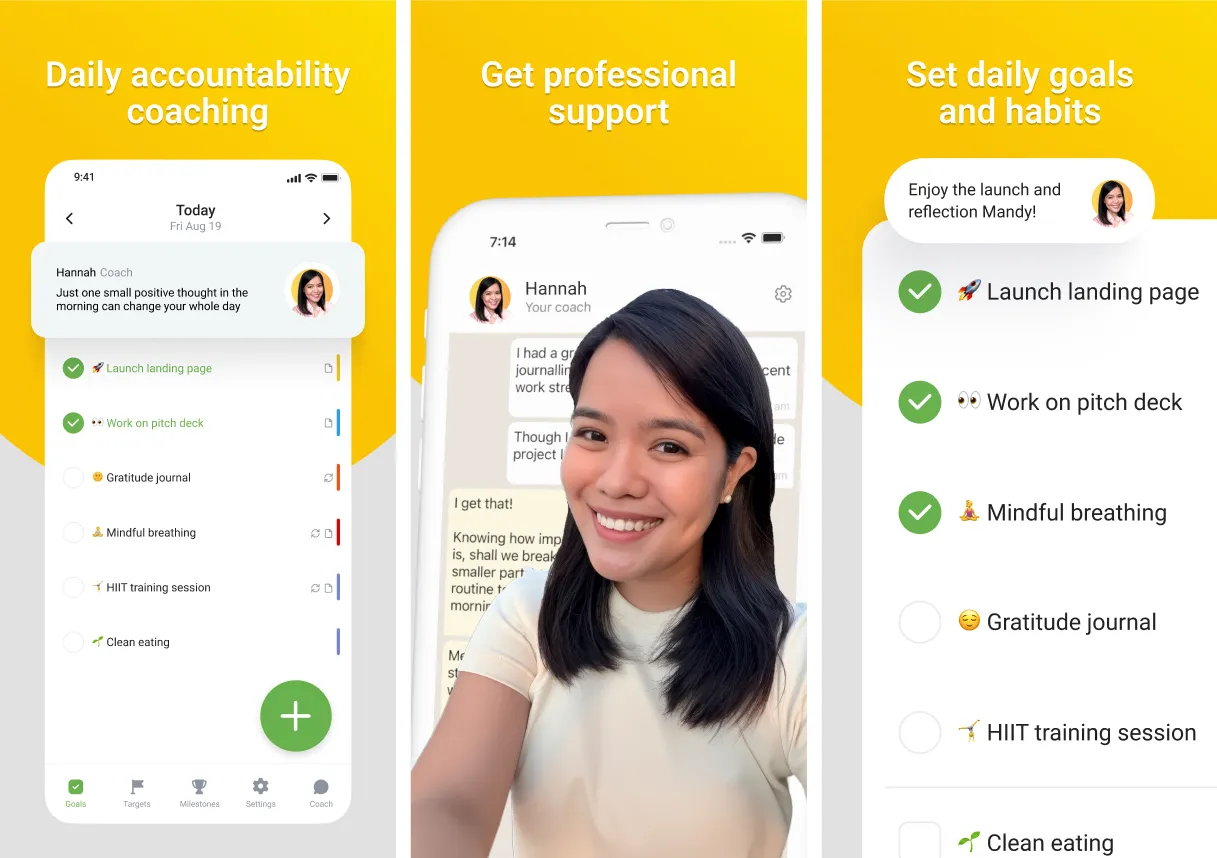
GoalsWon pairs you with a dedicated human coach who works with you every day of the week. Not once a week, not when you remember to open the app - every single day. Real human, not AI, not a chatbot.
Your free trial includes an onboarding video call so you meet your coach within a day (not after a week of texting a stranger). That face-to-face connection is an essential part of how accountability actually works. You’re not reporting to an app. You’re reporting to a person who knows your goals, your patterns, and your life. And if you don’t click with your coach, you can switch anytime at no cost - no awkward conversations, just a quick request.
Here’s the daily rhythm: you set your goals in the app each morning. At the end of the day, you submit your results: what you did, what you didn’t, and why. Your coach reviews everything (usually within hours) and responds with personalized feedback. They celebrate your wins, help troubleshoot when things go sideways, and nudge you back when you’re avoiding the hard stuff.
Beyond the daily check-ins, every month you get a free video call to review your progress and set new targets - 15 minutes focused on the bigger picture. Want more regular support? There’s an option to add weekly 15-minute calls to help you plan, stay focused, and build momentum week to week.
After coaching hundreds of people - entrepreneurs juggling startups, PhD students drowning in their dissertations, professionals with ADHD who know exactly what to do but can’t make themselves do it consistently - I’ve noticed the same pattern over and over. Most people don’t lack motivation or even discipline. They lack external structure. They know what they should be doing. They just can’t stay consistent on their own.
The shift usually happens within the first couple of weeks. Folks start telling me things like “I didn’t want to submit a blank day” or “knowing you’d see my results made me actually do it.” It’s not guilt, it’s that simple human dynamic of having someone in your corner who notices whether you showed up. One of my clients, ADHDer, put it perfectly: “I think the external accountability is exactly what I needed. I have been feeling more motivation to do my goals knowing you will see them and a feeling of not wanting to let you down.”
That’s the thing no app, notification or reminder can replicate.
The numbers: 4.8-star rating across 220+ reviews. Users in over 120 countries. Real humans, every day, all time zones.
Who it’s great for: Entrepreneurs and freelancers without a boss. Students managing their own schedules. People with ADHD who need external structure to follow through. Remote workers with no one watching. Anyone who starts strong but eventually quits (you know who you are). And honestly, anyone who’s tried tracking apps, streaks, and self-discipline and still kept falling off. If you’ve tried everything and still can’t stay consistent, that’s usually a sign the problem isn’t the tool. It’s that you’re still doing it alone.
Worth knowing: This is the most comprehensive option on this list, and it’s on the pricier side. If you’re looking for something free or prefer to track habits without coaching, the habit tracker section below has solid options.
If you want to see what daily coaching feels like, try GoalsWon free for 7 days.
2. Coach.me - Coaching Marketplace for Specific Skills
Best for: People who want coaching in one specific area (fitness, career, mindfulness) rather than comprehensive daily accountability
Platforms: iOS, Android, Web
Pricing: Free habit tracking; coaching prices vary by coach (expect $50+/week for experienced coaches)
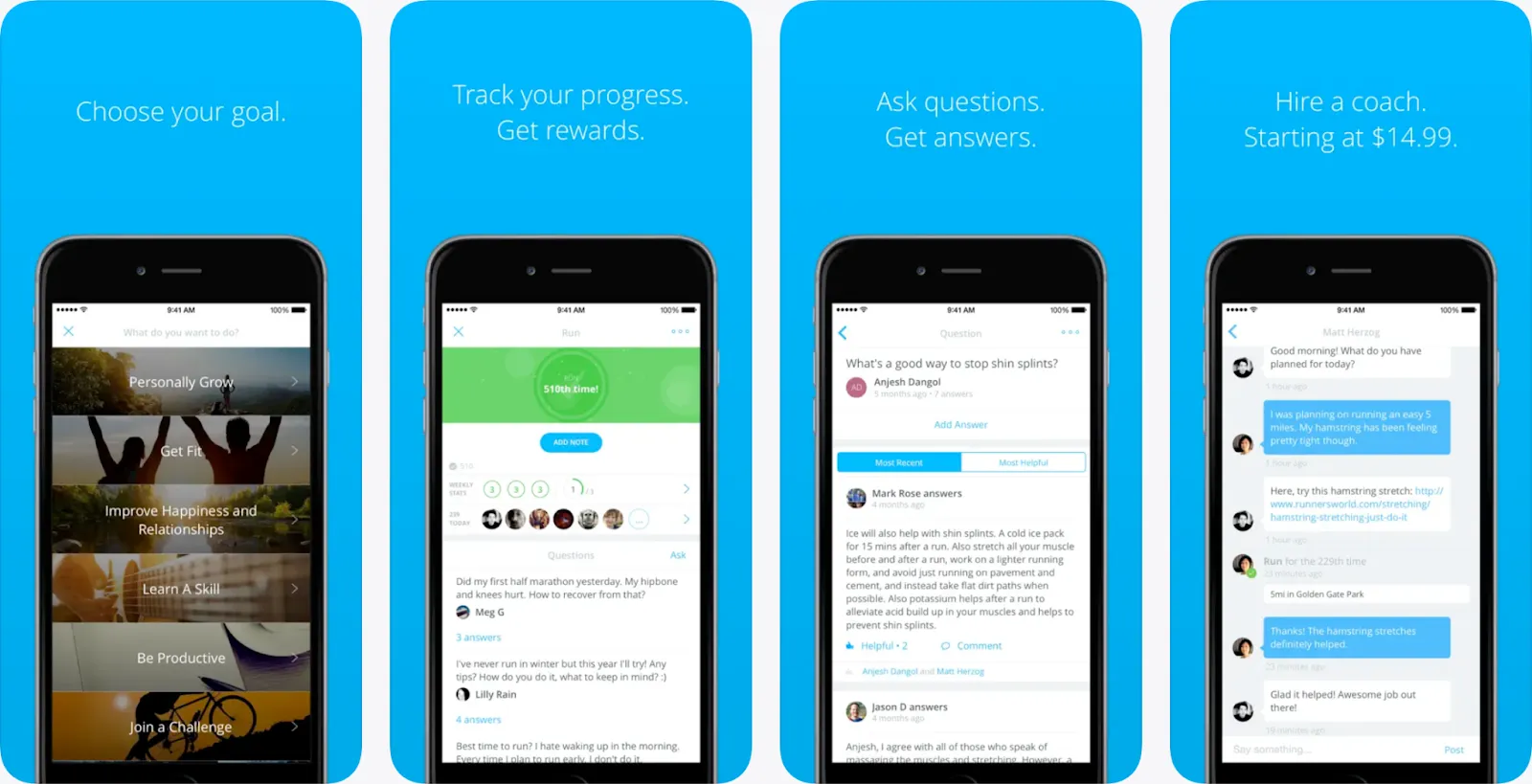
Coach.me (formerly Lift) combines a habit tracker with a coaching marketplace. You browse coaches by specialty and book sessions, it’s more like hiring a specialist for a particular domain than getting a daily accountability partner across all your goals.
The flexibility is a plus if you only need help in one area. But the trade-off is that you don’t get the consistent daily rhythm that builds long-term accountability. It’s more session-by-session.
Worth knowing: Quality varies since it’s a marketplace, some coaches are excellent, others less so. The best ones tend to fill up fast.
3. BossAsAService - Direct, No-Excuses Check-ins
Best for: People who want straightforward task follow-up without the deeper coaching and strategy layer
Platforms: Web-based (email/messaging + video calls on higher tiers)
Pricing: Basic plans from ~$30-40/month (check-ins only); Super plan at $100/month includes 1 hour of one-on-one time per month; Virtuoso plan at $200/month includes 2 hours per month
Tested by me: Yes
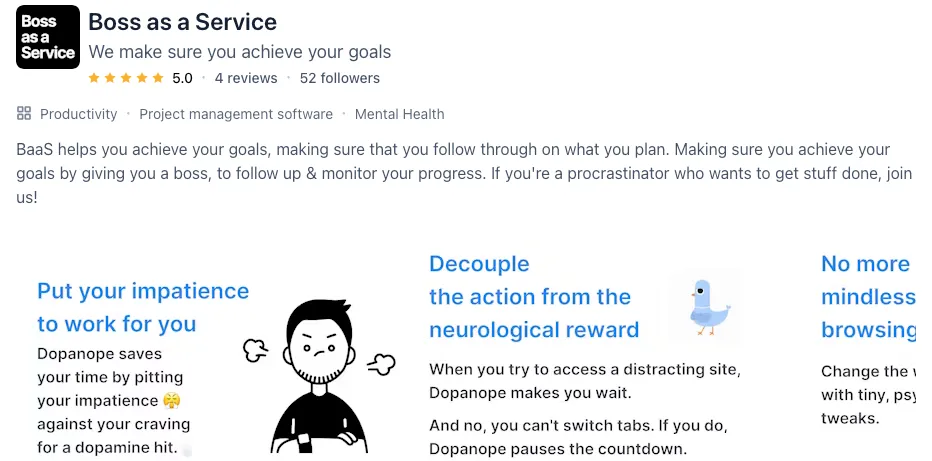
BossAsAService takes a different angle. Your “boss” checks in daily to make sure you did what you said you’d do. The tone is deliberately more direct - less coaching, more management. You tell them your plan, they follow up. Simple.
They’ve recently added Super and Virtuoso tiers that include monthly planning calls with your boss. You build a plan together, they check in daily to keep you on track, and you debrief together at the end of the month.
I tried BossAsAService myself and I like the concept. It’s essentially task follow-up over email and messaging. If that’s all you need, it works. But if you want the full package (a dedicated app with goal tracking, progress data, coach feedback, and video calls) that’s a different category.
Worth knowing: The higher tiers are similarly priced to GoalsWon but without the dedicated app, daily goal tracking, or progress data. It’s more of a structured messaging and calls relationship.
Financial Stakes Apps
These apps add real money on the line when you don’t follow through. The logic is loss aversion: losing $20 hurts more than gaining $20 feels good. If skipping your workout costs you actual cash, you’ll think twice before skipping it.
I’ve used tools in this category myself and recommended them to clients. They work well for specific, measurable goals, especially short-term commitments where you need an extra push. The limitation I’ve noticed is that financial stakes alone don’t help you figure out why you’re struggling or adjust your strategy. And for some people, adding financial pressure to goals they’re already stressed about can backfire.
4. Forfeit - Photo Proof or You Lose Money (+ Overlord AI Mode)
Best for: People who need hard consequences, either financial stakes with photo proof, or an AI that actively controls your phone, apps, and schedule
Platforms: iOS, Android, Mac (Overlord mode)
Pricing: Free to download; you set your own financial stakes. Overlord is a mode within the same app.
Tested by me: Yes
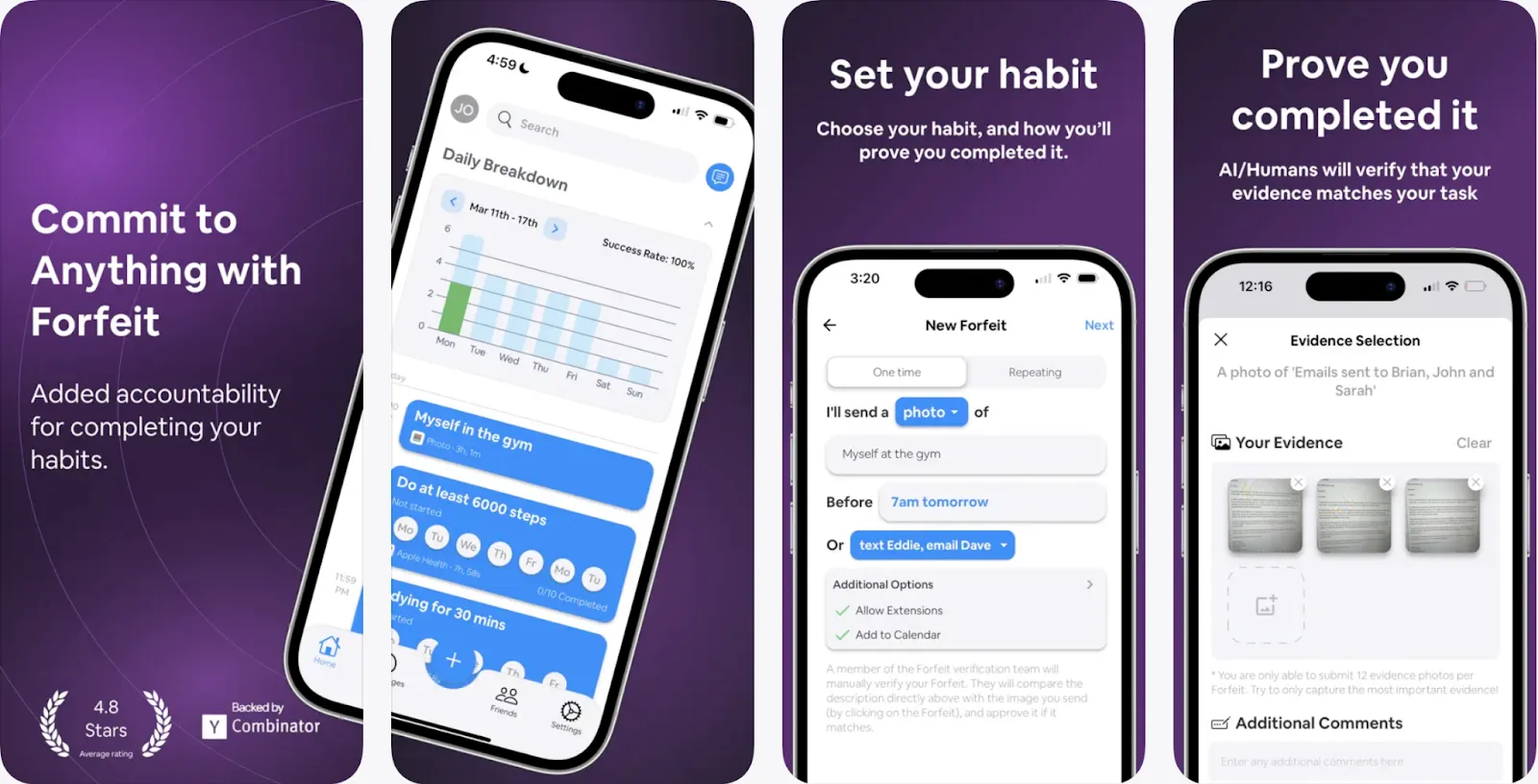
Forfeit has two modes. The original makes you put money on the line and submit photo proof when you complete a goal. No photo? The money goes to charity. The photo verification is what makes it different from just telling yourself you’ll do it. You can’t tap a checkbox and lie to yourself. I’ve had clients use Forfeit alongside their GoalsWon coaching and say the photo requirement kept them extra honest.
The newer Overlord mode is something else entirely. It’s an AI accountability partner that can block your apps via Screen Time, call you if you don’t wake up, charge you money if you disable restrictions, text your friends if you miss goals, and even track what you’re doing on your Mac. It integrates with Apple Health, Sleep Cycle, GPS, IFTTT, and more. Think of it less as a habit app and more as an AI enforcer that watches everything and applies consequences in real time.
Worth knowing: Forfeit’s original mode works best for goals with clear physical proof (went to the gym, ate a healthy meal, sat at the desk). Overlord is more comprehensive but it’s purely enforcement - no strategy, no coaching, no human relationship. It’s the most aggressive AI accountability tool I’ve seen, and for some people, that’s exactly what they need.
5. StickK - Commitment Contracts with a Referee
Best for: People who want financial stakes plus a friend or family member verifying their results
Platforms: iOS, Android, Web
Pricing: Free; you set your own financial stakes
Tested by me: Yes
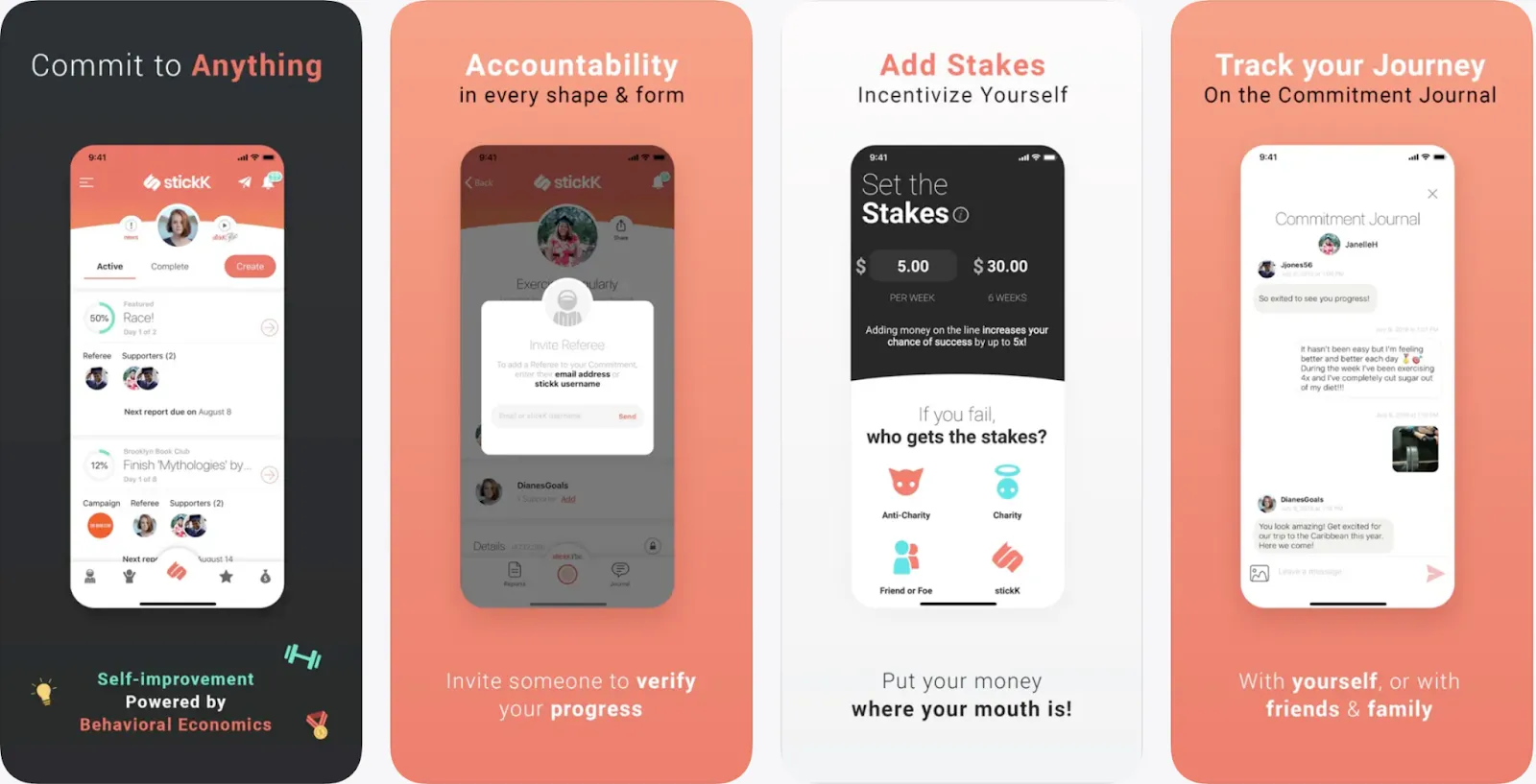
Created by Yale behavioral economists, StickK uses “commitment contracts.” You set a goal, stake money, and designate a referee (someone who verifies whether you actually followed through). Here’s the clever part: if you fail, your money can go to an “anti-charity”, basically an organization you actively dislike. Losing $50 is motivating. Losing $50 to an organization you can’t stand? That’s a completely different level of urgency.
I used StickK myself when I was struggling to be consistent with exercise. The change was immediate, every time I thought about skipping, the mental image of losing money to a cause I opposed pushed me forward.
Worth knowing: The system depends entirely on having an honest referee. I’ve also noticed some clients find financial penalties stressful rather than motivating. Especially if they’re already dealing with shame around their goals. In those cases, it can create a punitive dynamic that makes things worse, not better.
6. Beeminder - Quantified Accountability with Automatic Tracking
Best for: Data-driven people who want automated tracking and escalating financial consequences
Platforms: Web, iOS, Android
Pricing: Free to start; charges escalate per failure ($0, $5, $10, $30, $90, and up)
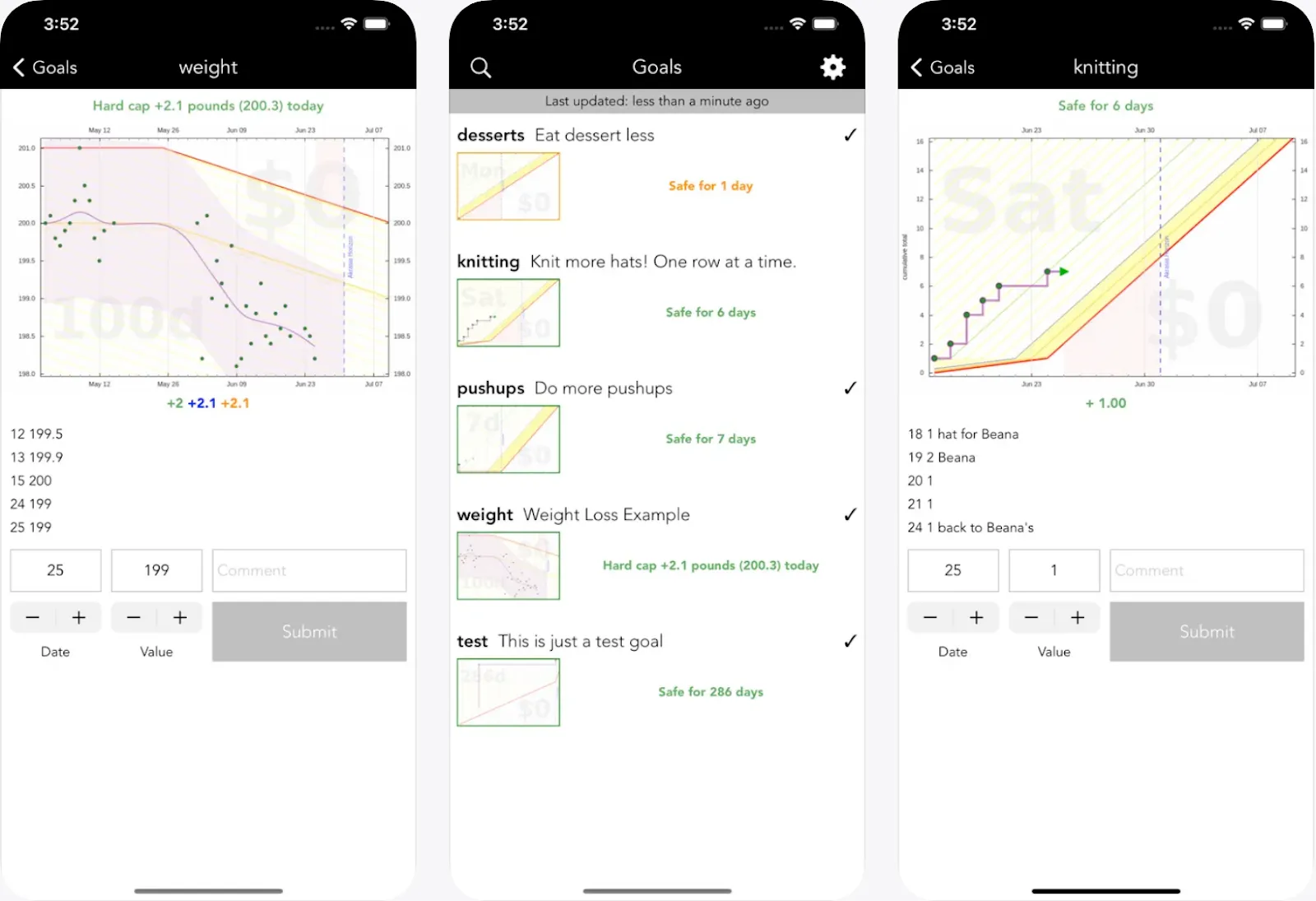
Beeminder tracks your goals on a graph and charges real money when you go off track. What sets it apart is the integrations, it connects with dozens of apps (Fitbit, Toggl, RescueTime, Duolingo) to pull data automatically. No manual logging means no way to fudge the numbers. As a quantified-self person who spent a year tracking every activity of my life, I appreciate the philosophy here.
The escalating charge model is clever: each failure costs more than the last, creating increasing urgency over time.
Worth knowing: Steep learning curve. The escalating charges can get expensive fast if you fall off track. And the interface is functional but not exactly beautiful.
Accountability Partner & Body Doubling Apps
These apps connect you with other people (usually strangers) to create social accountability. Working alongside someone else, even virtually and silently, helps a lot of people focus and follow through. This is especially true for people with ADHD. The concept is called “body doubling,” and the research shows it genuinely works.
Before building GoalsWon, I went through every version of peer accountability I could find: friends, Reddit partners, Discord servers. Most of them followed the same arc: enthusiasm for a few days, then people disappeared. These apps solve the reliability problem by always having someone available, but they still don’t provide the ongoing structure that professional coaching does. That said, they’re free, and free is hard to argue with!
7. Focusmate - Virtual Co-Working with an Accountability Buddy
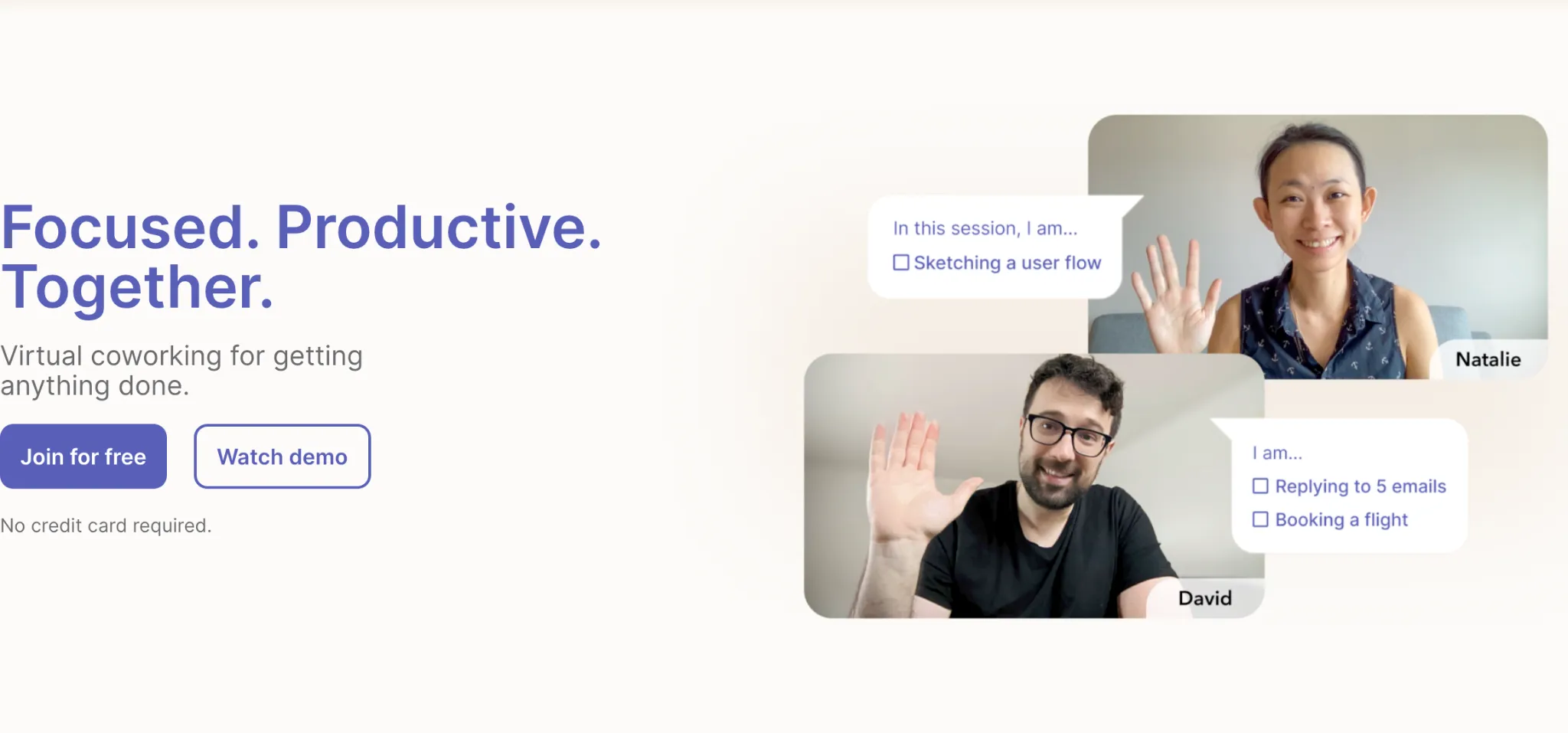
Best for: Remote workers and students who struggle with procrastination and working alone
Platforms: Web
Pricing: Free for 3 sessions/week; unlimited at $96/year or $12/month
Tested by me: Yes
Focusmate pairs you with a random accountability partner for 25, 50, or 75-minute work sessions. You share what you plan to work on, cameras stay on, you work silently, and you report back at the end.
I’d heard a lot of people recommending Focusmate, and after trying it I get why. There’s something about stating your goal to a stranger, working on camera, and then reporting back that makes you actually do the thing. It’s that body doubling effect, having another person present changes how you show up. Many of my clients with ADHD describe Focusmate as a game-changer for getting started on tasks they’ve been avoiding for days or weeks.
Worth knowing: You’re matched with random people, so experiences vary. Most sessions are great, but occasional no-shows happen. And this is purely about getting work done in the moment, there’s no ongoing structure, no follow-ups, no one tracking your bigger picture. I keep recommending it to anyone who struggles with focus when they actually sit down to work. It’s powerful for that. But it won’t help with the bigger picture, like what you should be working on or whether your approach is right.
8. Flown - Facilitated Focus Sessions with Community
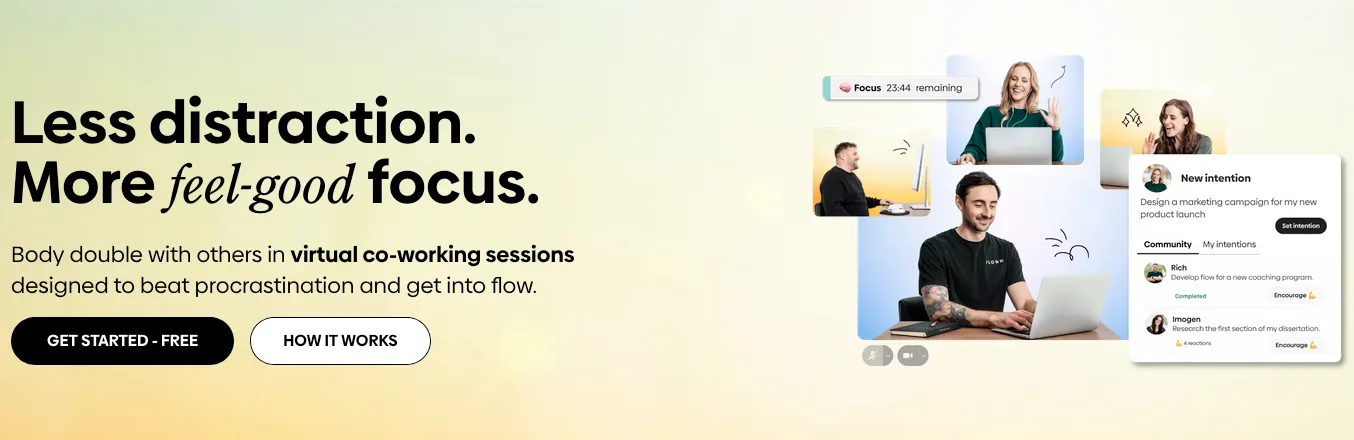
Best for: People who want structured co-working sessions led by a facilitator
Platforms: Web
Pricing: Free tier available; premium from ~$228/year or ~$25/month
Flown is similar to Focusmate but with facilitated sessions, where a host guides the group through focused work sprints. Someone else structures your work time, which removes the decision fatigue of figuring out when to start and when to take breaks. There’s also a community aspect for ongoing connection.
Worth knowing: Sessions are scheduled rather than on-demand, so it’s less flexible for unpredictable schedules.
9. Reddit & Discord Accountability Communities - Free Peer Matching
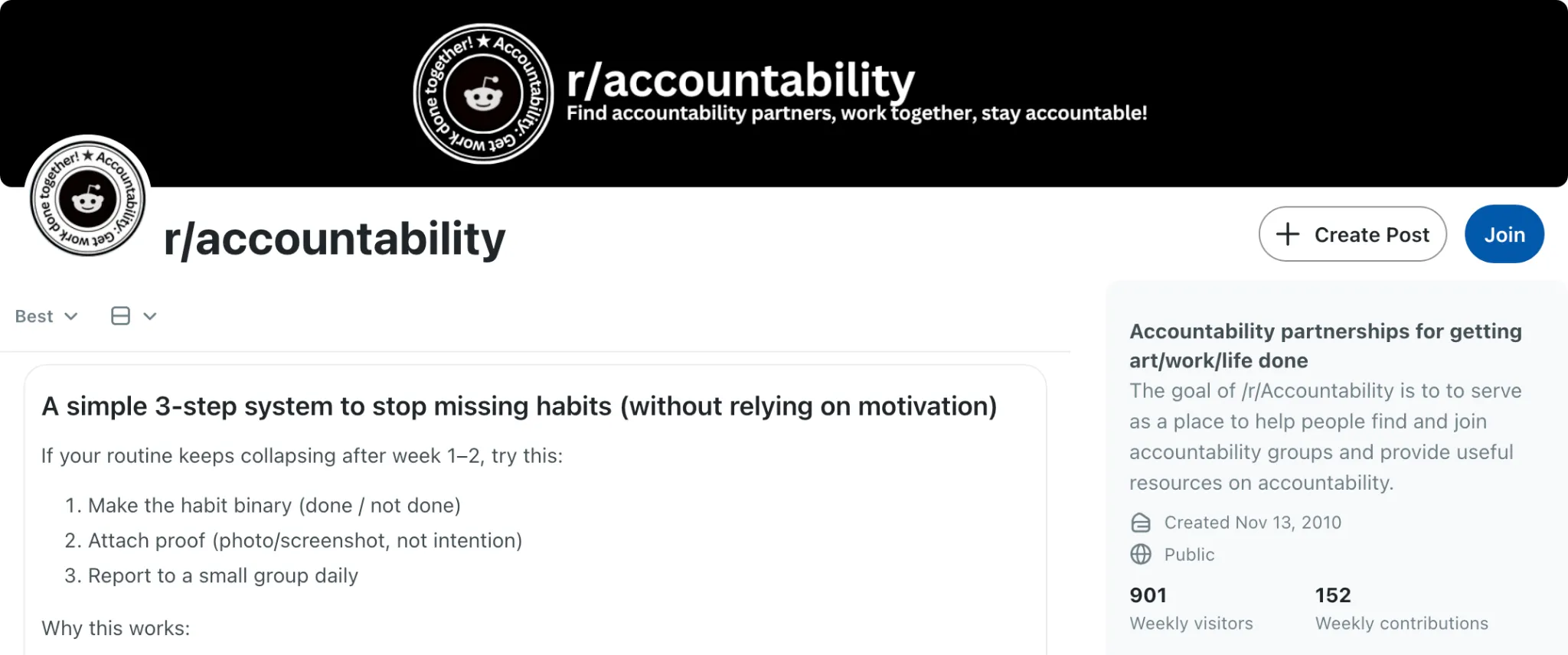
Best for: People who want a free accountability partner and are willing to put in the effort to find a good match
Platforms: Web, iOS, Android (via Reddit/Discord apps)
Pricing: Free
Tested by me: Yes, extensively, before building GoalsWon
Before GoalsWon existed, this is where I spent months looking for accountability. Subreddits like r/accountability and r/Accountabilibuddies are full of people posting their goals and looking for partners. Discord servers do the same thing in real time: you join a channel, share your goals, and try to find someone to check in with daily or weekly.
I’ll be honest about what happened: most people disappeared within a week. In the group channels, accountability gets diluted fast… when everyone is posting goals, nobody is really watching yours. And in the 1-on-1 pairings, you’re splitting your attention between your own goals and supporting your partner, which can feel more like a second job than a support system. I went through a string of partners who fizzled out before I eventually found the handful of people who actually stuck around (including Simon, who became my co-founder).
So it can work. It’s just unreliable. You’re essentially betting on finding someone who matches your commitment level, your schedule, and your communication style. For free, among strangers.
Worth knowing: The best approach is to treat it like a trial period. Post in a subreddit, match with someone, and give it two weeks. If they’re consistent, you may have found something genuinely valuable. If they ghost (which is the most common outcome), don’t take it personally. It’s the nature of free, unstructured peer accountability. The people who want something more reliable are usually the ones who eventually move to a paid option.
Habit Tracking & Self-Accountability Apps
These apps rely on you to hold yourself accountable through streaks, data, and gamification. They’re the most affordable option, and they work well if you’re already fairly self-motivated and just need a system to organize your habits.
I’ll be direct though: for most of the clients I work with, self-tracking alone wasn’t enough. The pattern is almost always the same: they downloaded a habit tracker, used it enthusiastically for two or three weeks, and then the app became invisible. If that sounds familiar, it doesn’t mean habit trackers are useless. It might mean you need a different type of accountability layered on top.
That said, habit trackers are genuinely useful as a complement to other accountability methods. Several of my clients use a habit tracker alongside their coaching to see their consistency patterns visually.
10. Habitica - RPG-Style Gamification for Habits
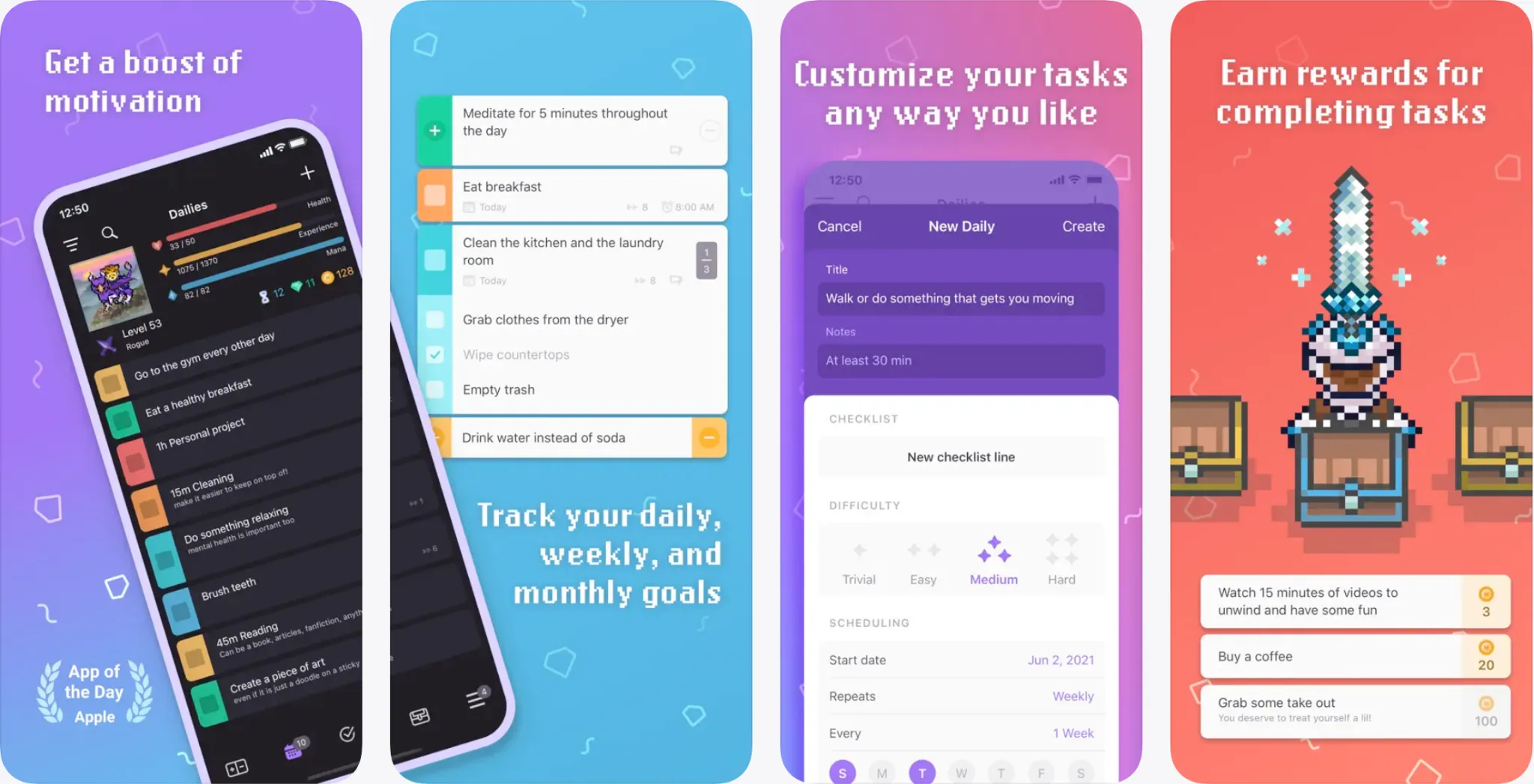
Best for: People who respond to game mechanics and want habit tracking to feel fun
Platforms: iOS, Android, Web
Pricing: Free; premium for $4.99/month
Tested by me: Yes
Habitica turns your habits into an RPG. Complete tasks to earn gold and level up your character. Skip them and your character takes damage. Join a party with friends, and your failures hurt the whole group (which adds an interesting social accountability layer).
I used Habitica for a while and the gamification definitely kept me more engaged than a basic tracker. The novelty factor is real. But I noticed the motivation fading after a couple of months once the game mechanics became routine.
Worth knowing: If gamification is your thing, this is the best version of it. Just be aware that for most people, the novelty wears off.
11. Streaks - Clean, Minimal Habit Tracker for iPhone
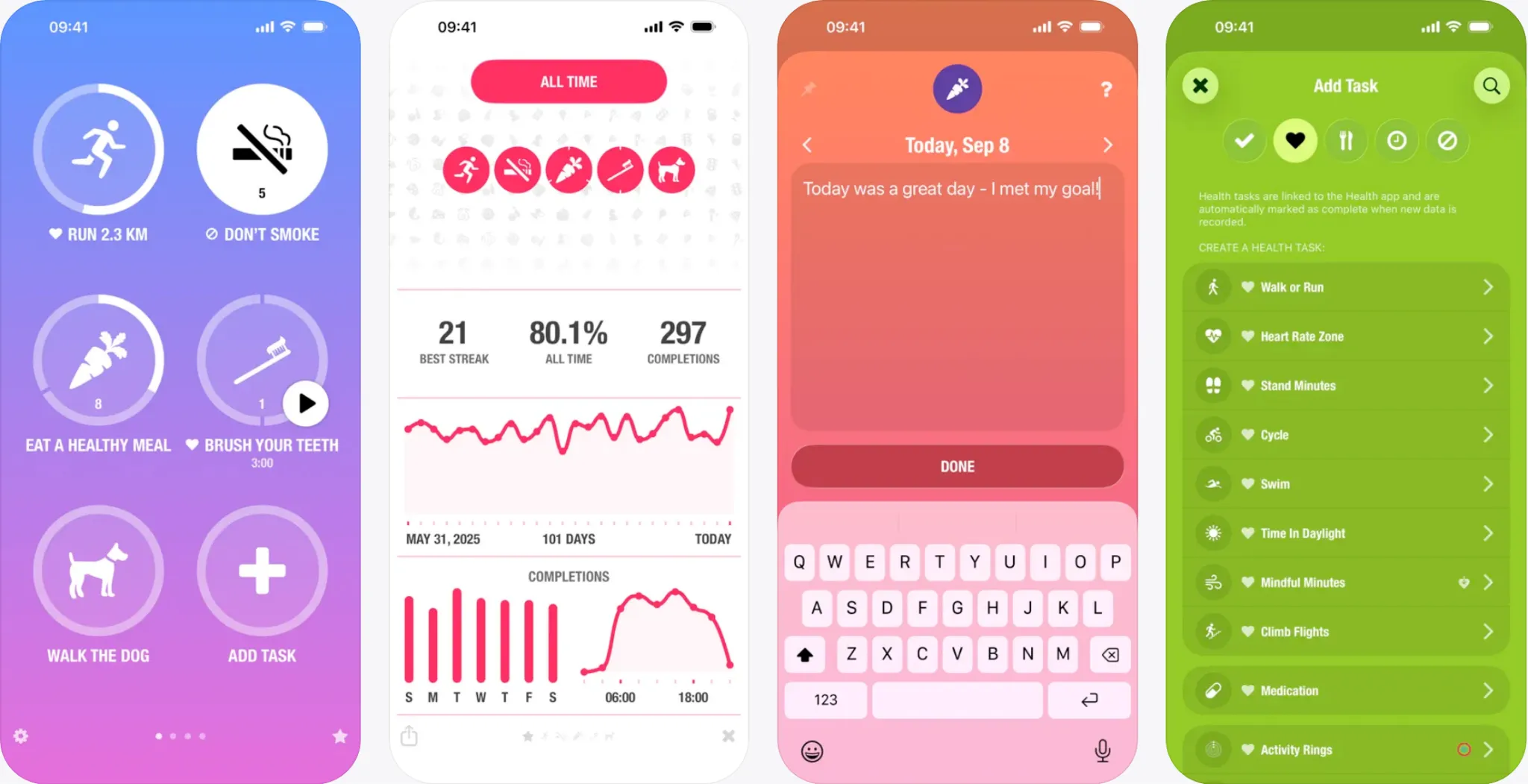
Best for: iPhone users who want a simple, beautifully designed habit tracker
Platforms: iOS, Apple Watch, Mac
Pricing: $4.99 one-time purchase
Streaks tracks up to 24 habits with a gorgeous interface and integrates with Apple Health to automatically log exercise, sleep, and meditation. One-time purchase, no subscription.
Worth knowing: iOS only. The streak mechanic can actually backfire. For a lot of people, one missed day kills all motivation and the whole system collapses. If you tend toward “all or nothing” thinking, be aware of that risk.
12. Loop Habit Tracker - Free, Open-Source for Android
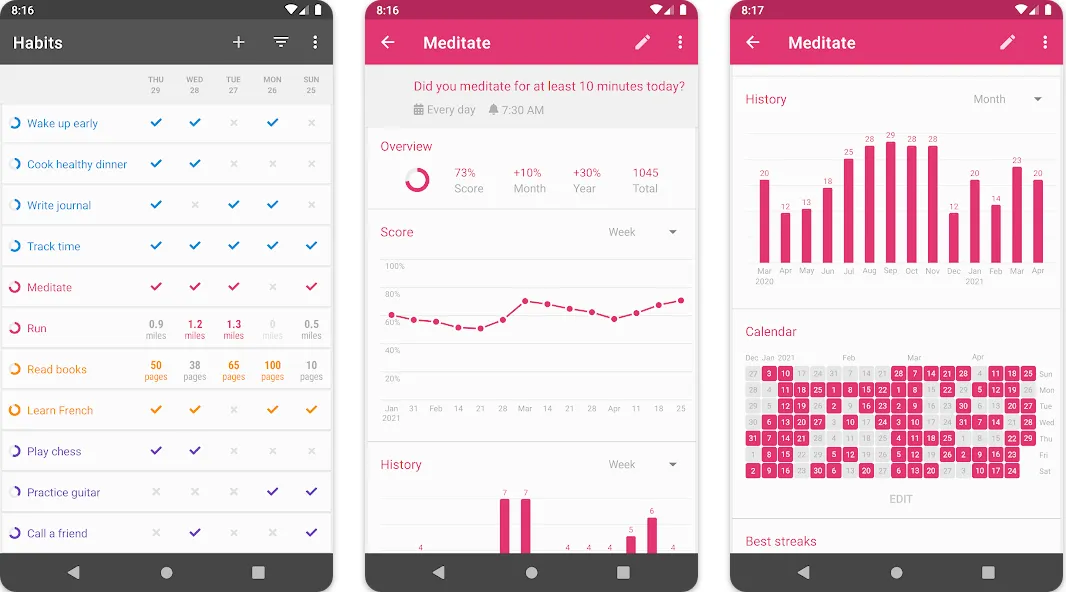
Best for: Android users who want a free, ad-free habit tracker with solid analytics
Platforms: Android
Pricing: Free (open-source, no ads)
Tested by me: Yes
Loop provides detailed charts, flexible scheduling, and a “Habit Score” that rises or falls based on your consistency. Completely free, open-source, zero ads or tracking. As a bit of a data nerd, I appreciate that Loop gives you real analytics on your patterns rather than just a checkmark.
Worth knowing: Android only. Pure self-tracking, no social features, no coaching, no one checking whether you actually opened the app.
13. Habitify - Cross-Platform Habit Tracking
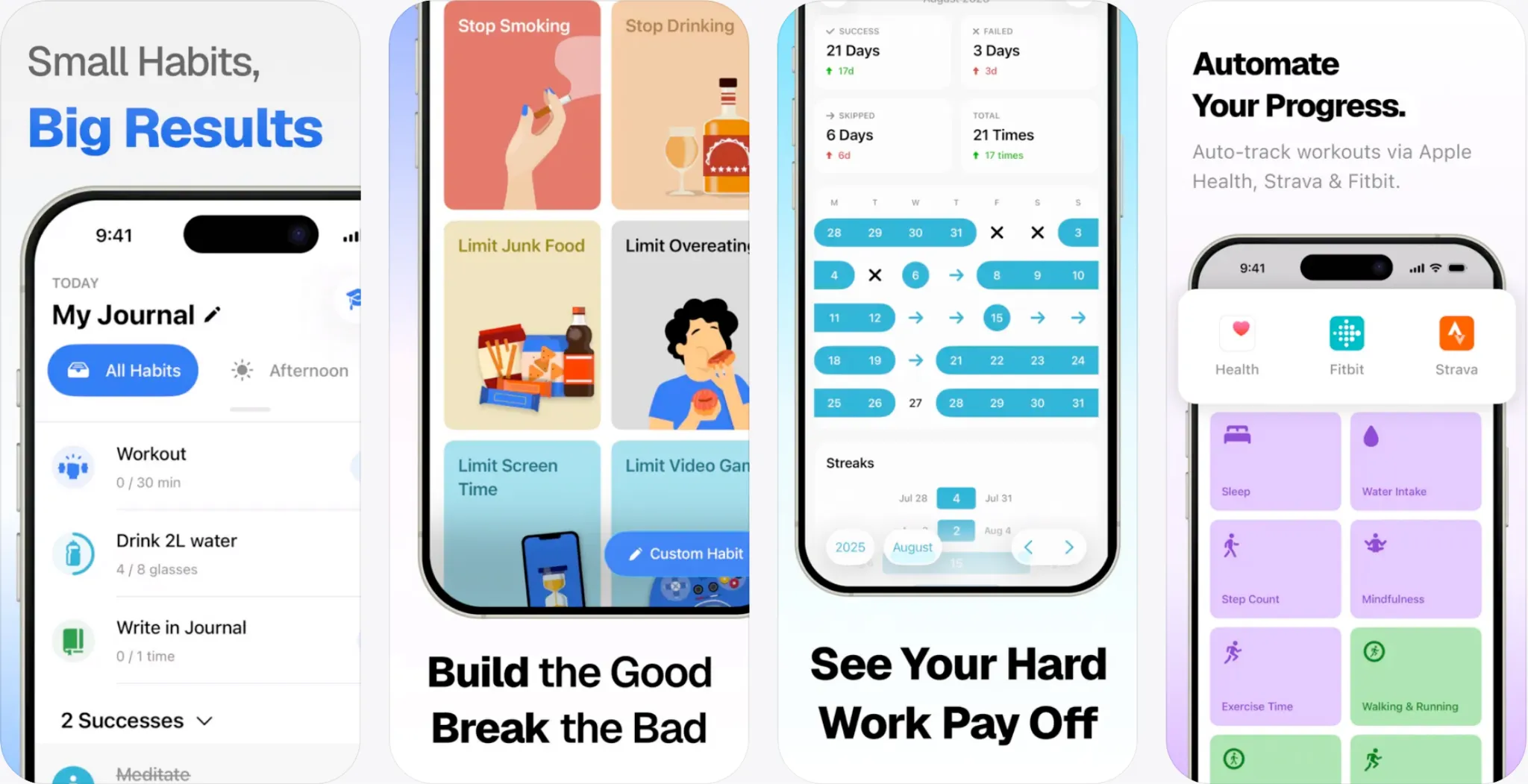
Best for: People who use multiple devices and want their habit data synced everywhere
Platforms: iOS, Android, Mac, Web
Pricing: Free (3 habits); premium from $4.99/month
Habitify tracks habits across all your devices with good data visualization. View habits by time of day, track completion rates, see trends over time.
Worth knowing: Free tier is very limited at only 3 habits. You’ll need premium for any serious use.
Niche Accountability Tools
14. Forest - Stay Off Your Phone
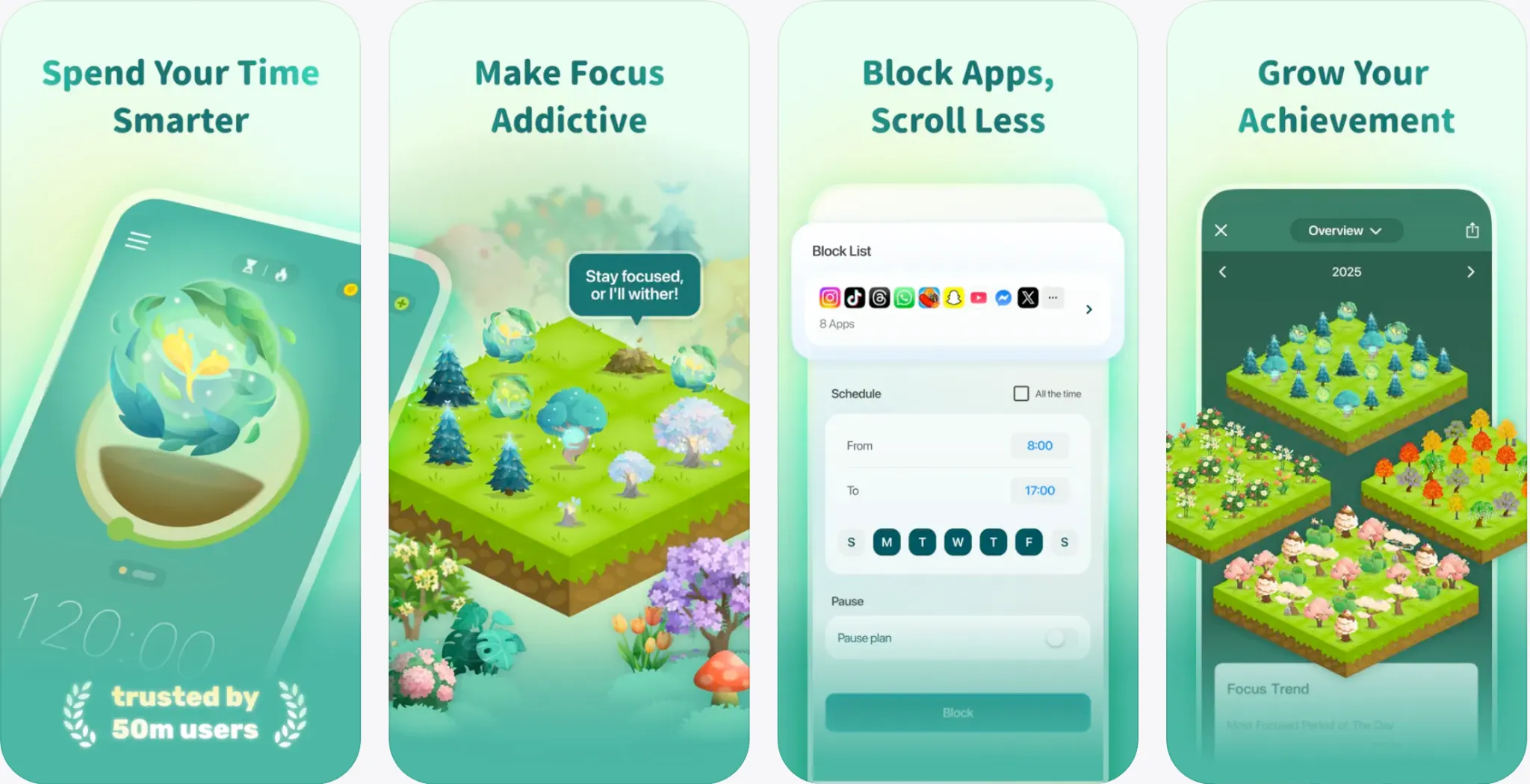
Best for: People whose main accountability problem is phone distraction
Platforms: iOS, Android
Pricing: $3.99 (iOS); Free with in-app purchases (Android)
Tested by me: Yes
Plant a virtual tree when you want to focus. Pick up your phone and the tree dies. Over time you build a forest, and the app partners with a real tree-planting organization, so your virtual trees translate to actual trees planted. How cool is that!
Worth knowing: I used Forest when I was trying to cut my phone screen time. It’s a clever mechanic, and surprisingly effective in the moment. But it only addresses one specific problem: picking up your phone. It’s not a general accountability tool.
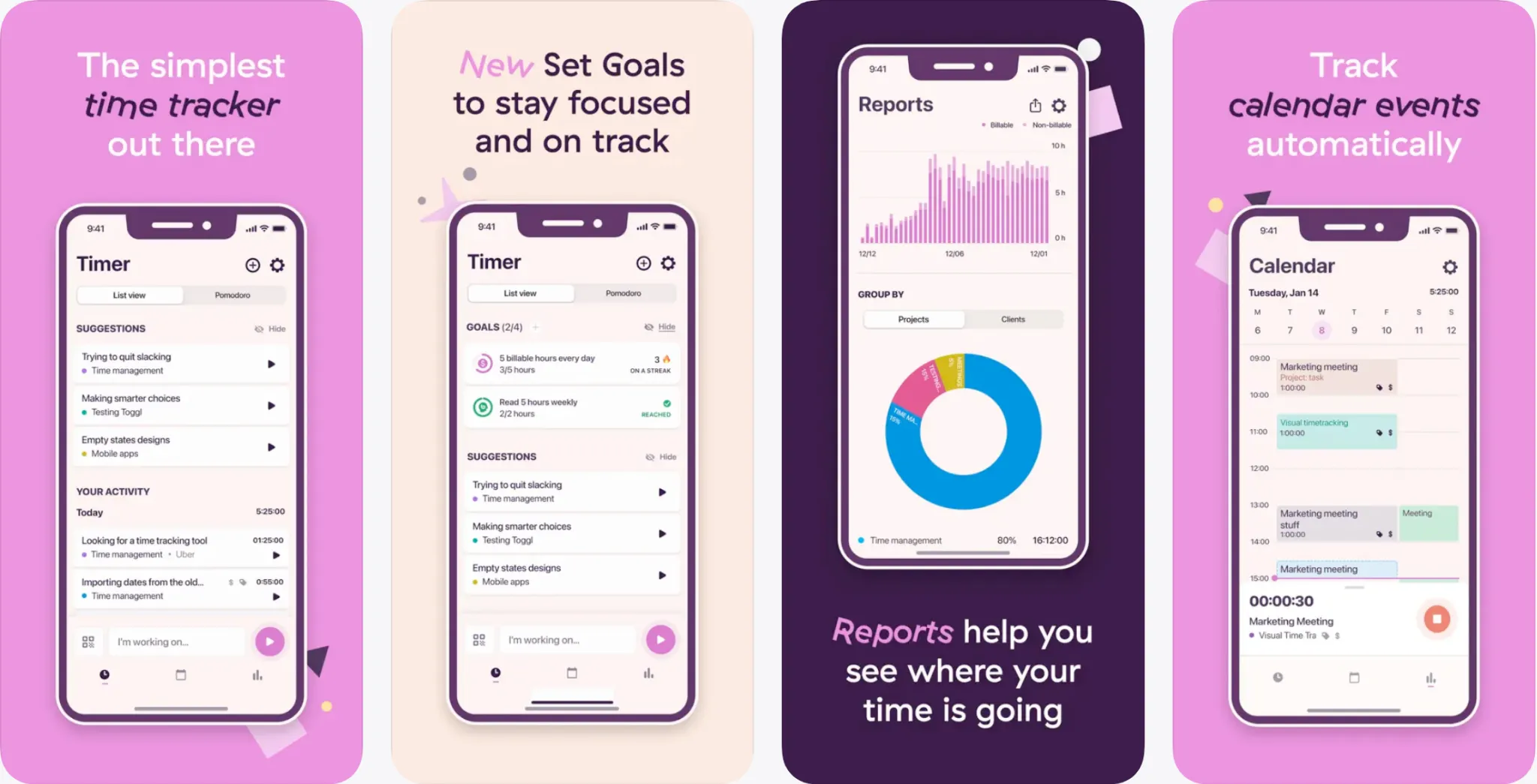
15. Toggl Track - Time Tracking for Self-Awareness
Best for: Freelancers and anyone who wants to understand where their time actually goes
Platforms: iOS, Android, Web, Desktop
Pricing: Free for individuals; paid from $9/user/month
Tested by me: Yes (extensively!)
Toggl Track isn’t really an accountability app, it’s a time tracker. But it holds a special place on this list because of what it did for me. I used it to track every single activity of my life for over a year - every hour of work, every meal, every session of video games, every minute of reading. It was one of the most eye-opening productivity experiments I’ve ever done.
Here’s my actual Toggl report from 2020’s first half, over 3,000 hours tracked across six months. You can see exactly where my time went, including the nearly 190 hours of mindless internet browsing I’d categorized under a project I literally named “Trash.”
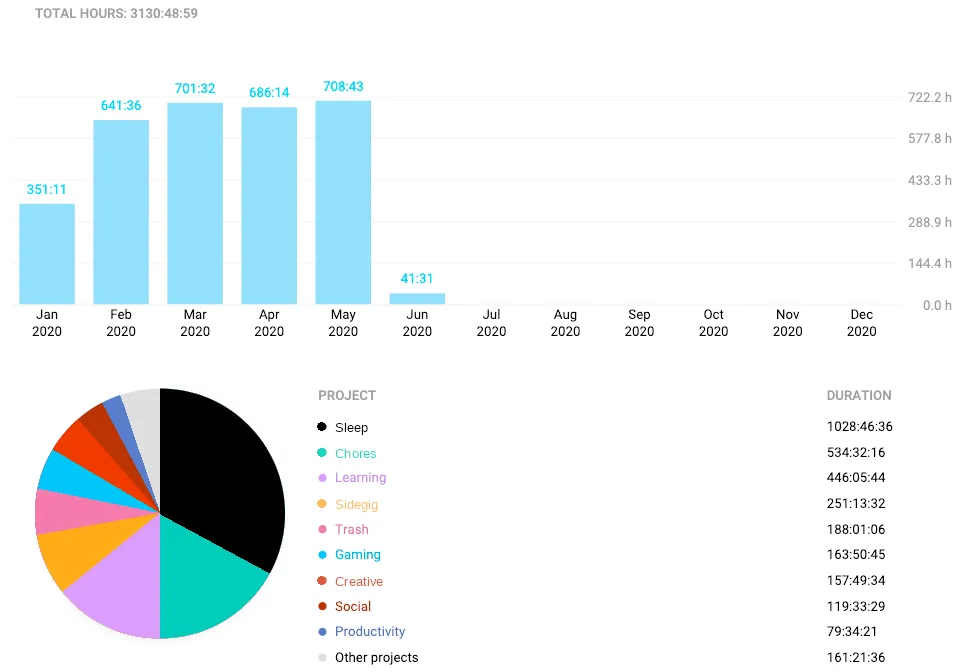
When you actually see the data - not what you think you’re spending time on, but what you actually spend time on - it’s hard to keep lying to yourself. That’s when I discovered I was “too busy to read” while averaging 90 minutes a day on entertainment. Toggl didn’t fix that by itself, but the awareness made it impossible to ignore.
I still recommend Toggl to clients who feel overwhelmed or claim they “don’t have time” for their goals. A week of tracking usually reveals the truth pretty quickly.
Worth knowing: Awareness alone doesn’t drive change for everyone. Some people see the data and still don’t change behavior, and that’s where other forms of accountability need to kick in.
What About AI Coaching Apps?
You might be wondering why there’s no AI coaching category on this list. After all, it’s 2026, there are accountability apps powered entirely by AI, and you can even set up your own system with any LLM.
I’ve tried it. And I’ve heard from plenty of clients who tried AI accountability before coming to GoalsWon. Here’s the honest assessment: AI coaching tools can be useful for brainstorming, breaking down goals, and even daily reminders. The technology is impressive.
But at the end of the day, you know you’re still alone. If you ignore the notification, you’re not hurting anyone’s feelings. If you skip a day, nobody is disappointed. You can close the app, delete the conversation, and start fresh with zero consequences. The social aspect of accountability - the part that actually makes it work - is completely absent.
The research on accountability consistently points to the same thing: what makes it effective is the human relationship. It’s knowing that a real person will see your results, that someone who knows your patterns will notice when you’re slipping, that you’ll have to look another human being in the eye (or at least in the chat) and explain why you didn’t do what you said you’d do.
Don’t get me wrong, I’m not anti-AI. I use AI tools every day. And tools like Forfeit’s Overlord mode prove AI can enforce accountability through app blocking, penalties, and tracking. And it’s genuinely impressive for self-control. Rosebud, an AI-powered journaling app, is part of my daily reflection routine. I use Claude as a strategic planning partner for my business (weekly dive-deep reviews, prioritization). These tools are genuinely useful for thinking, planning, and organizing. But for the kind of accountability that comes from a real human relationship - someone who knows your patterns, adjusts your strategy, and notices when you’re avoiding the hard stuff? That’s still a human thing.
How to Choose the Right Accountability App
After five years of coaching and testing every type of accountability system I could find, here’s how I’d think about it:
Start with a coaching app if:
- You’ve tried tracking apps before and still fell off (this is most people I work with)
- You know exactly what you need to do, you just can’t make yourself do it consistently
- You don’t have built-in external structure (eg- you’re an entrepreneur, freelancer, student, or remote worker)
- You struggle with consistency and “all or nothing” patterns
- You have ADHD and need external structure to follow through
- You want someone who actually knows your patterns and can help you adjust - not just a notification
Try a financial stakes app if:
- Loss aversion is genuinely your strongest motivator
- You need hard consequences, not coaching and strategy
- Your goals are already specific and measurable (work out 4x/week, write 500 words/day)
Go with an accountability partner app if:
- Working alongside others helps you focus
- Procrastination (specifically starting tasks) is your main problem
- Body doubling works for you (many people with ADHD find this transformative)
- You want something free or very affordable
Use a habit tracker if:
- You’re already fairly self-motivated and just need a system
- Budget is your primary concern
- You want data on your consistency patterns
- You plan to combine it with another form of accountability
Combine them if you want the full system. Plenty of my clients use GoalsWon for daily coaching and strategy alongside Focusmate for deep work sessions, or a habit tracker for extra visual data on their consistency. These tools aren’t rivals, they solve different parts of the problem.
My honest take after years of trying everything: The more human and personal the accountability, the more effective it is. Notifications are easy to swipe away. Financial stakes work until you adjust to the losses. Streaks break and motivation disappears. AI coaches are impressive but you’re still fundamentally alone. But a real person who knows your goals, genuinely cares about your progress and wellbeing, and shows up for you whether you had a great day or a terrible one? That kind of accountability is genuinely hard to walk away from.
That’s what I didn’t find in any app before we built GoalsWon. And that’s why, for most people, I’d suggest starting with a daily coaching app and layering in other tools from there.
Start your free 7-day trial → goalswon.com
Written by Joel, co-founder of GoalsWon and accountability coach since 2020. Last updated: February 2026. I regularly review and update this guide to keep it accurate.